• Work
  • About
  • Contact
  • Blog
Menu

Dana Ariel Schmerzler

  • Work
  • About
  • Contact
  • Blog
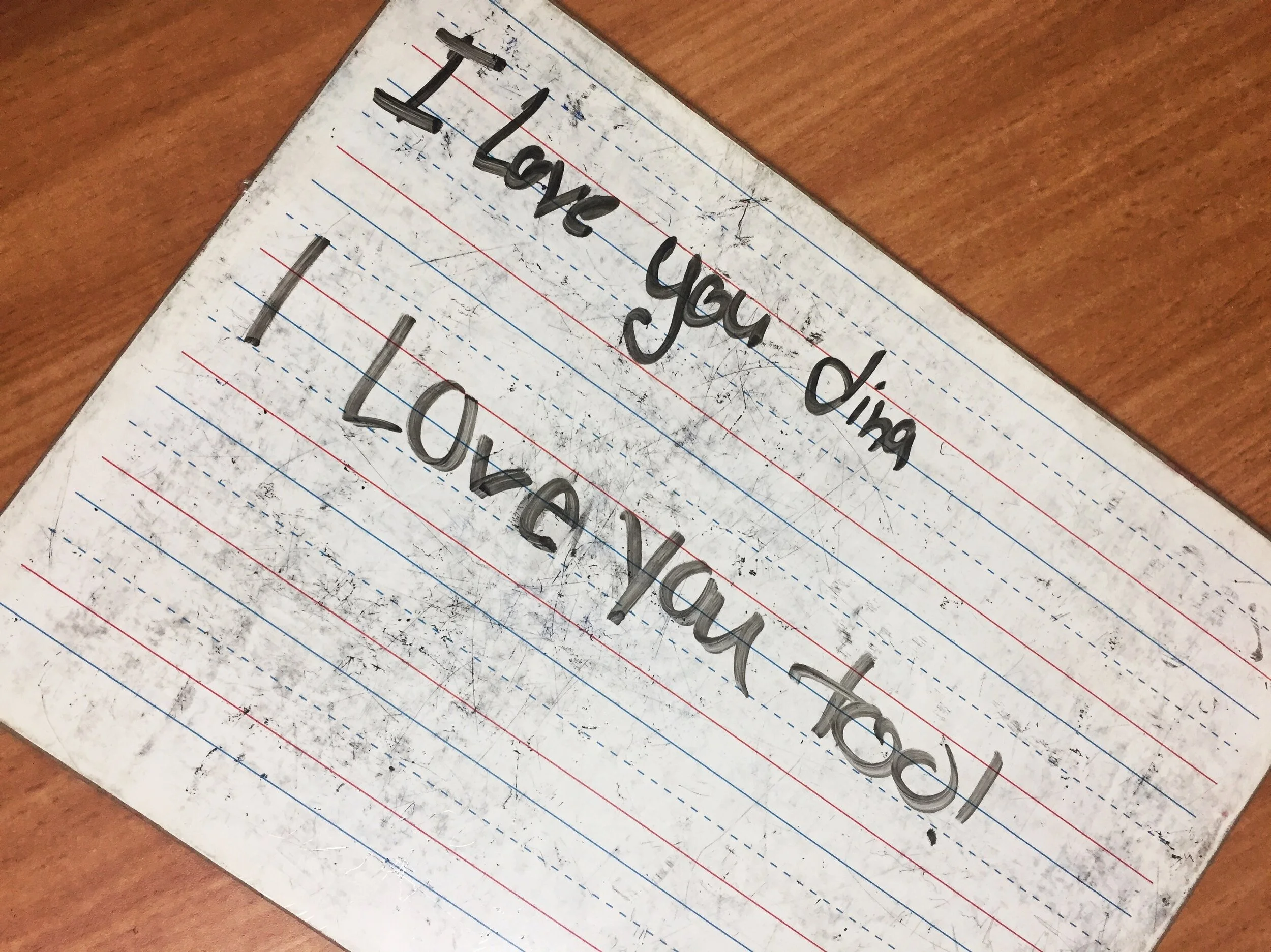
“I love you” note from my student Fidaa.

“I love you” note from my student Fidaa.

El-Zahra: A school with a garden

January 24, 2020

I work at a school called El-Zahra, a name which I don’t know the meaning of. The school reminds me of blue skies and sunlight peeking through the shadows. The outside is lined with flowers and plants that little hands put into the ground, dirt embedded in their fingernails. There is a greenhouse, the size of which my father would be proud of, and strawberries that will never look as luscious when grown on Long Island. 

We visited four schools to volunteer at and this was my first choice: the school surrounded by flowers and growth. It has a courtyard in the center, the ceiling covered by strips of tarp, and open hallways that are exposed to the elements. I wonder what happens when it rains. Birds periodically fly through the halls. At first, it seems beautiful, until you realize there is no janitor to clean up the poop left behind in the hallways and on the walls. And for the first time, you realize that every school does not come with a janitor, like a thoughtful package. 

It’s a school run by a woman - vibrant and determined. She is always sprinting to do something so you only ever see the tight curls of her hair as she whips by. The assistant principal is a man - strict and punctual. He yells with such terror when a teacher doesn’t show up to work that I hope to never disappoint him. The kids - I can not explain by merely two sentences, for it would not do justice to their wild spirit and yearning eyes. But I will try, in hopes of capturing the essence of their sweet innocence and how they have brought out the tender parts in me. 

I tutor them in English, a language that can unlock doors that I never knew were bolted shut and covered in barbed wire. Doors that can help them catch up to children with lighter skin and eyes. They have names that I’ve seldom heard or never heard at all - like Waed, Siwar, Fars, and Yumna. My first stab at making the guttural sounds of Arabic and failing miserably, leaving me to be corrected again and again. I do the same for them every time they say Dina when pronouncing my name, Dana. I guess we are learning together. 

On the first day, three months ago, I sat in a circle with each group - vulnerability pouring out of every one of us, our eyes so eager but hesitant. We went around saying our names and asking questions in a way that my friends and I have coined the Maayan Circle. Maayan is our Hebrew teacher, and we too sit in front of her eager and hesitant, and take a stab at a new language that may not unlock a bolted door but will build connection. She is a teacher who says wonderful after every Hebrew word that’s forced from our mouths, our tongues and jaws moving in ways that feel wrong. So my goal is to say wonderful after every word my students utter, even when it’s not perfect. I know how much validation can help keep a person going. 

I tutor 4th-6th graders and the difference between the three bewilders me. Did I change so much in three years? Did I also go from an unknowing child to a kid whose innocence was dwindling, and boundaries were being pushed? To whom the world slightly seemed less sunny but more real and the veil of childhood was slowly pulled off? Whether they are ready or not, a new image of the world is coming to them. I wish I could capture their innocence in a jar and give them doses when they need it, when hope seems far and they begin to question why the world is unfair, or maybe they have known it all along but now it is a looming fact in the forefront of their mind. I wish I could take a dose of that innocence for myself, on days that are so melancholy, stagnation feels satisfactory. Jars of innocence held in secret capsules, in a faraway land, protected by the knights of childhood dreams, like all the fantasy movies. 

The second week was the most overwhelming. Every time I went to pick up the kids from class and bring them to our tiny three-walled study room, my heart beat faster and faster. Their excitement warmed my heart but also made me think I was so under qualified to satisfy their desire to learn. Or maybe that is something to never satisfy but grow, which makes my task more daunting - to be interesting enough for them to want to keep learning. I slowly learned how to lesson plan and create structure for souls that just want to play. And how can I blame them for wanting to play when I’m rooting for their innocence to stay intact? The secret is, I want to play too and pretend the floor is made of lava and we have to jump from stone to stone to protect ourselves from the steaming liquid and if we fall off we will perish to a fiery death. But you need mutual language to fully play. So instead I teach. 

There is one student in fourth grade, who has stuck out in my mind from the beginning. Her name is Waed and she desperately wanted to color the first day. She raddled off every sentence she knew in English to prove they knew enough so now there was time to color. Shamefully, I had no markers or crayons and the “teacher” in me felt there is no time for fun when there is so much to learn. When was I taught that toxic idea? She would become the same student who memorized all the facts about my life. I am 27 years old, I have one brother, his name is Spencer, I am from New York and I like to paint. She says it proudly every week, like she is telling me, “I love you and all your facts and please say more so I can keep telling you about yourself because I think every part of you is wonderful.”

As the weeks passed, I slowly learned how to create structure for these kids who seem to have so little, who can leave class at any moment to go to the bathroom or just walk the halls and hide when the principal passes by. These are kids who do not walk from class to class in a line or have assigned seating in the lunchroom or have a lunchroom at all. They are kids that get a ten-minute break at 10:40 am and when that clock strikes it is like a flock of birds soaring to the South, where there is freedom from the cold. You better watch out or you will get bumped by every kid sprinting your way to try and get to the basketball court the fastest in order to soak up every bit of those ten minutes. Isn’t that beautiful?

There are many things here that question by belief in teaching and my own experience as a child. Like, when is structure too much structure and when does running around the halls need to be disciplined and when do you just let them be, to make mistakes and laugh and cry and even be mean. How much is meant to be controlled and how much should be free, for them to discover? And then, how do you give them the confidence to discover on their own? It is love and tenderness or strict structure? Is it tests and grades or is it planting your own seeds and learning about how their roots will take form in the coming weeks?

I often think about June, the hot, dry, yet sticky Israeli weather, the dark color of the sand, the dried-out grasses. I think of June because that is when I have to say goodbye to the eyes that have so much wonder and have given me love that will stay with me for years. I think about every time they tried to ask, “How old are you?” always leaving out the word “old” because it sounds similar to “are” and is hard to pronounce anyway. I will miss trying to explain why their response, “I am ten years old” needs to include the word “years” if it does not show up in the question. I will miss the countless times they ask me to play and the countless times I say English first, play second, while always questioning why it needs to come second. I will miss the students who I always need to tell to sit down and the ones who sit anxiously waiting for me to speak. I will miss their innocence and ability to love so quickly, no questions asked. Most of all, I will miss their drive to learn and the fact that they are trying to move forward at such a young age - their ability to breakdown a barb-wired door that is bolted shut. 
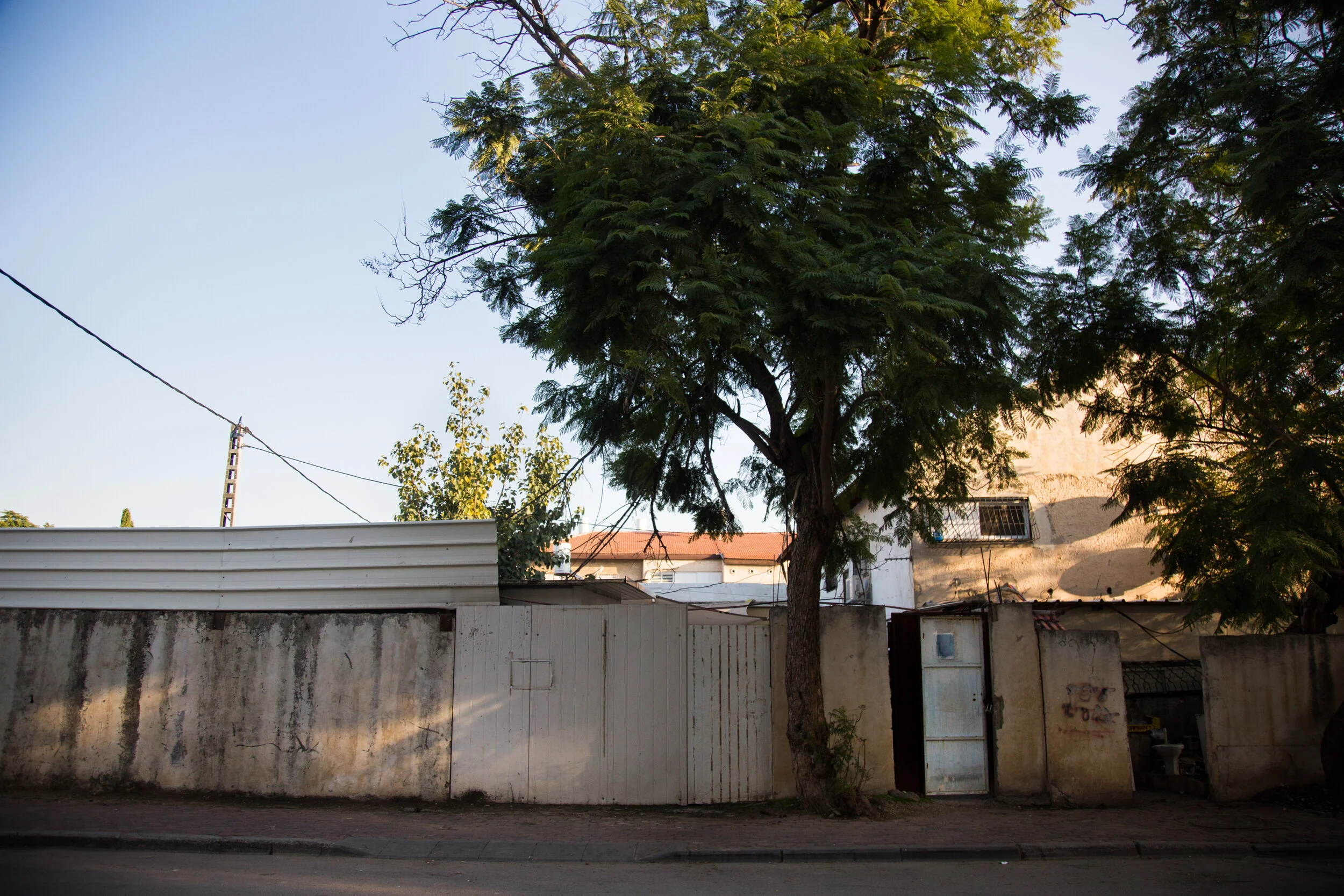
The white door leading into Tesfa.

The white door leading into Tesfa.

"This Land Was Made for You and Me"

December 24, 2019

I volunteer at a place called Tesfa - meaning hope in Tigrinya. It’s a little classroom situated in the middle of our neighborhood, enclosed behind a white metal door with a lock. Apart from hearing the laughs of children as you walk by in the evenings, you would never know it was there. Tesfa was created by Michael, a refugee from Eritrea who saw a need to build a haven for the children in his community. Every day between 5-7 pm, they come to learn Tigrinya and English, to stay connected to their heritage and move beyond.

This placement was most intimidating to me. I have never taught English before and could not imagine teaching a classroom of 30 children. As I approached Tesfa on my first day, I heard the laughter emanating from that door. Upon walking in, we were greeted immediately with smiling faces and jumping feet. The kids were running around playfully, waiting to eagerly meet their new English teachers. Many quickly gave us hugs, as if they already loved us unconditionally. Some were excited to use their English, asking my name and complimenting my glasses and shoes. My intimidation was calmed and ignited at the same time. How can I cater to such loving and ambitious kids, whom I know almost nothing about? 

One week before this encounter, I had no knowledge of Eritreans living in Israel. Upon hearing their story, I felt that it mirrored those of refugees in America. Their parents came with hopes of a new life, one where they could live more freely. Before the Israeli border was closed six years ago, they made their way through Sudan, Egypt, and Sinai to the Holy Land - a land that will not grant them citizenship but a temporary residence card that has to be renewed every two months. A land that will not recognize their children as citizens despite being born here, who go to a Jewish school although they are Christian. A land that will not provide them with a community center - instead, their parents have to pay for a little room behind a white metal door. 

I come from a country where refugees are seldom welcome by policy, where you hear racist rhetoric spewed by the government and echoed by half the nation. I come from a country where if you are born on it, you are at least granted fundamental rights. Now I live in a place where I can receive citizenship based on my Jewish heritage but these young children, who speak the language, who were born here, who are so hungry to learn, cannot claim that right. I think of their little hands, bright big eyes, smiles, laughter, and tears. I think of the trading card games they play, as I did as a child, of their backpacks with Elsa and Olaf, the latest obsession. I think of their endless energy, the words they continuously babble, just like my cousins, with endless thoughts and questions and trepidation.

What makes me better or greater or more righteous that I could live here and not them? I didn’t fight to come here as their parents did, I didn’t walk day and night in fear of hunger, of being captured, of being turned away. I didn’t even try. I bought a ticket and hopped on a plane. My hands hold less weight than theirs but my blood is valued at a higher price. I think of every nation and every border and the struggles that could be prevented - that only exist because of the constructs we have made for ourselves over time - that we now consider legitimate and right. Borders are being restricted because another human being said so or maybe because God said so and it is justified - confirmed on paper and enforced by men in uniform and gun at hand.

Now, I think of the song we would sing in fifth grade - when times were simple, where I would run home to trade my Pokemon cards and hope to get the latest Disney backpack for my birthday. When I truly believed that “this land is your land, this land is my land,” when the word border held no meaning and when land ownership meant nothing more than the sandcastles I made at the beach.

Sun setting in a community center in the old city of Acre.

Sun setting in a community center in the old city of Acre.

Reflections of Two Mixed Cities

December 2, 2019

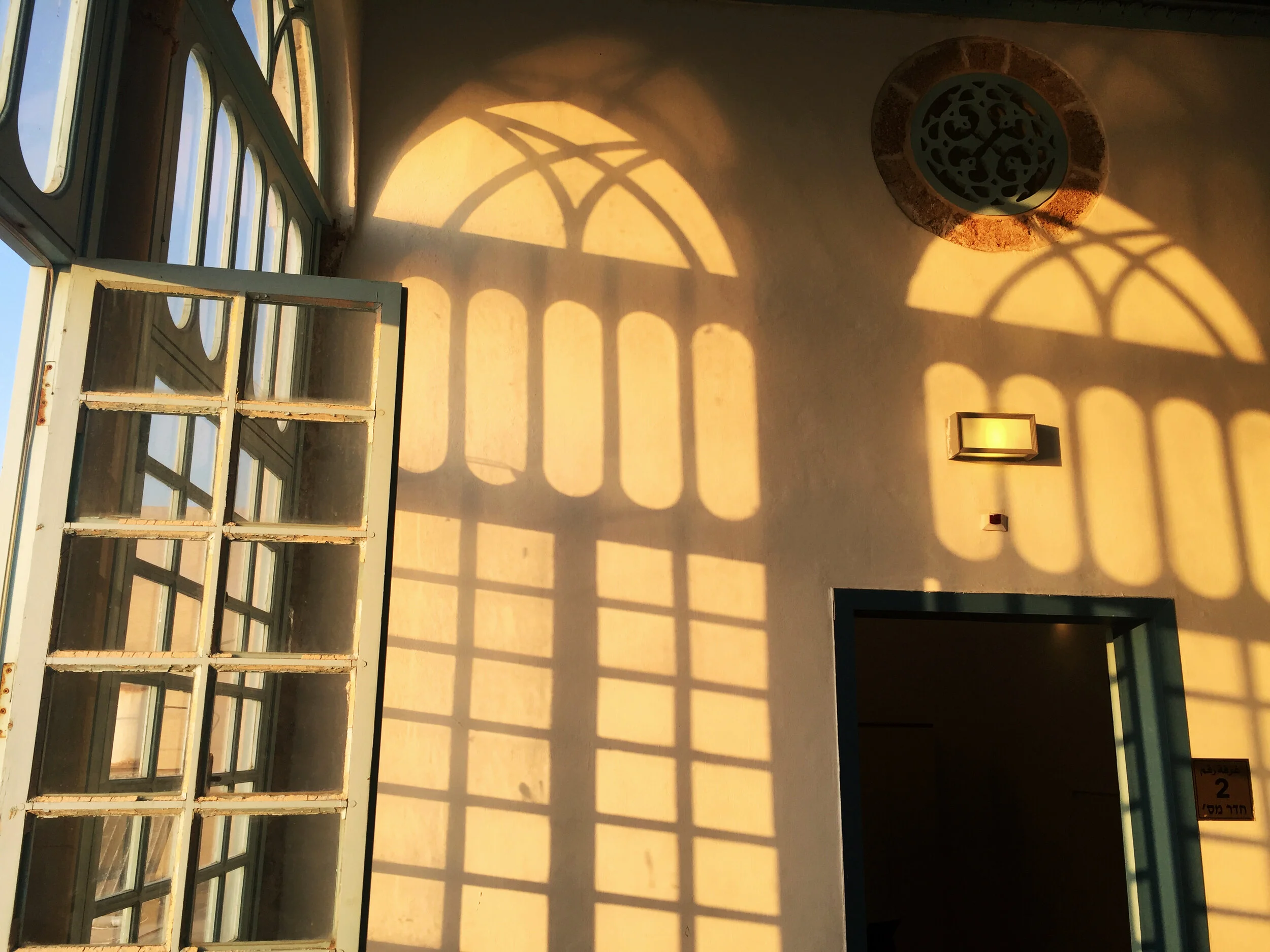
Earlier this week I attended a staff day in Acre with The Abraham Initiatives as part of my internship program. The Abraham Initiatives strives for equal political and social rights for Jewish and Arab citizens, aiming to turn mixed societies into shared societies. They do this by implementing programs and presenting their results to the government to create lasting policy change. I was picked up in Rishon LiZion by fellow staff members. The atmosphere was comfortable, as if it were four friends just going for a drive. During the ride, I tried to decipher the little Hebrew I know with translations along the way. The consensus was: everyone wanted hummus and coffee. Sitting with these four women, I did not initially know that everyone had a different background: Russian, Arab Christian, Arab Muslim and Ashkenazi. I have only been in Israel for five weeks and have quickly learned that this could be a rarity. We drove past the border between Israel and the West Bank and several separated Jewish and Arab communities along the way. These varied facades beg you to dig deeper into the history – only beginning to tell the story of this place.

Before coming to Israel, I had little knowledge of what a mixed city is and the complexities that exist. At first look, it appears as if society is shared – Arabs and Jews are working together in the local bakery, sitting across from one another on the bus and rushing to the same market before Shabbat. Then I began to learn about the separate school systems, community centers and government programing. This felt overtly alarming through my American lens, but when two groups of people do not share their language, culture or religion, separate systems start to appear as leverage. Still, there is discrimination towards the Arab community that remains to hinder their growth socially, politically and economically.

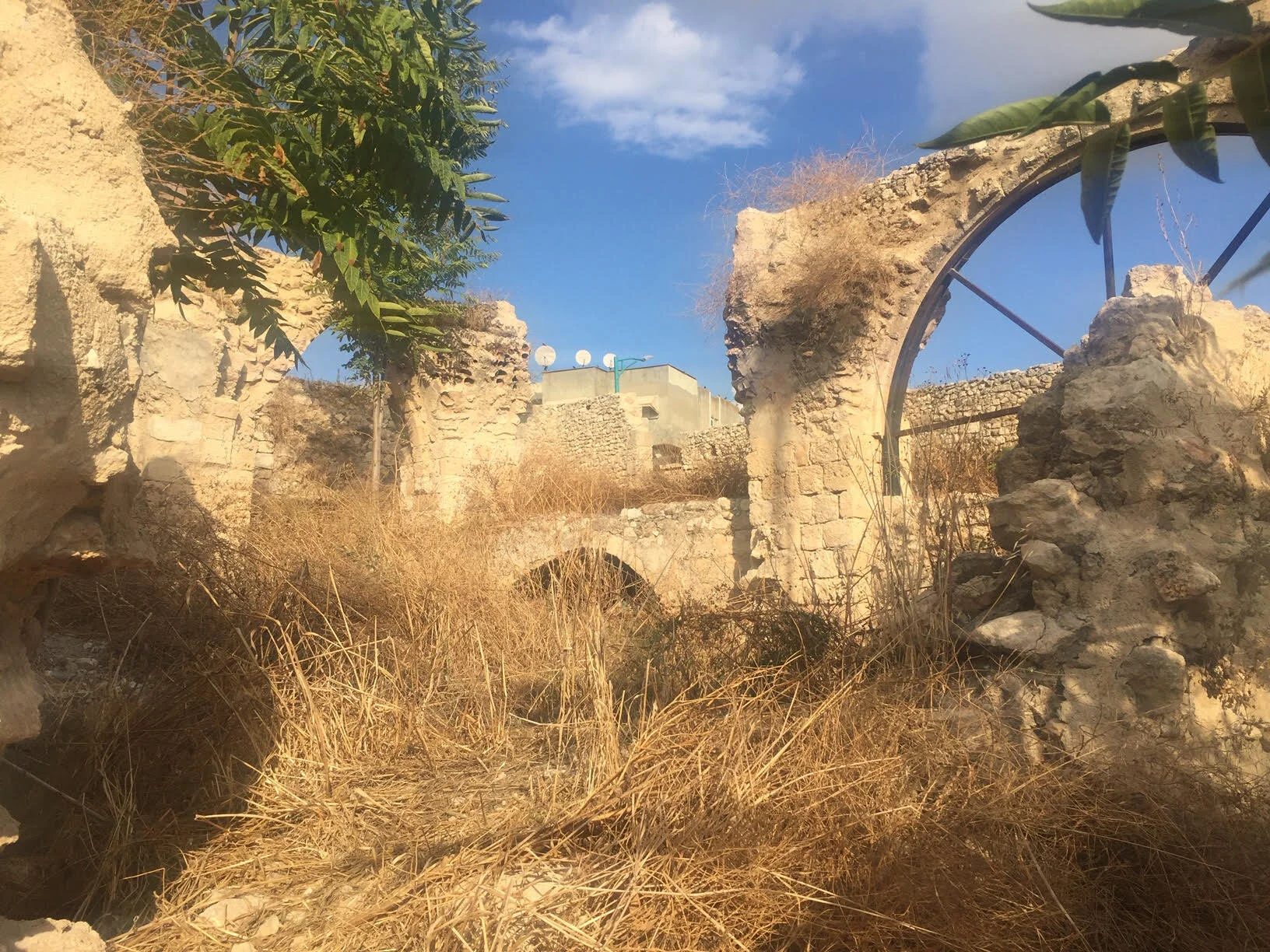
Acre is known to be one of the more successful mixed cities in Israel based on the demographics and Arab representation in the local government. I am currently living in the mixed city of Lod, which faces less success and I am eager to learn the differences. The majority of our day consisted of touring the Old City of Acre led by Maher Zahra, who is part of the young entrepreneur movement in Israel. Most old cities in Israel have a similar ambiance – the building walls and floors are lined with tan porous brick, there are clothes hanging on lines outside the windows and modern businesses fill the old entry ways. You can’t help and wonder what was there before, and how this place changed over time while the structure remained the same. All the doors were painted turquoise or blue, batting away the evil spirits that could evade the quiet stone walls. I was shocked upon arrival of this old city because it hardly resembles the one in Lod. It is hard to appreciate its antiquity when garbage liters the ancient buildings that are now home to the stray cats and overgrown shrubs. It feels as if the old word has been forgotten, with asphalt streets and modern buildings dispersed in between – that there is no time for preservation of the past when you can barely preserve the present.

The majority of the population in the Old City of Acre is Arab, who are originally from there or displaced. The majority of the Jewish population lives outside the old walls. There are thriving businesses although many are owned by people who do not live in the city – taking their profits elsewhere. There are people who own property but also do not live there – creating many vacant residences. Although Acre’s tourism is rising, it seems it has not reached it potential – the grave silence of the old city on a Monday midday, mirrors the absence of economic growth for the people living there.

The Old City of Lod differs in that Jewish people make up a larger percentage of the population. A large increase of Jewish people began moving there in the early 2000s, creating a new set of challenges for this place. There is now less focus on preserving and more on integrating. Among the tension, the old city is loud and vibrant on weekdays, you can hear different languages being spoken and in one corner there is a mosque, church and synagogue sitting together. There is a restaurant open on Shabbat with Arab and Jewish workers where I am hoping to one day claim my status as a regular. This is not a place familiar with tourism as the businesses and the people who frequent them are locals. The residences are full and it is the only area in Lod where Jewish and Arab people live in the same building. This is something that is becoming more common in the country but still considered unique.

The community centers in both cities are an example of the separate systems that also have some overlap. Upon arriving to Israel, I was shocked at how many community centers exist in these areas and what a vital role they play, especially in the lives of the children who live there. A common misconception is that Arabs have a higher quality of living in mixed cities when in fact they are more vulnerable and often come from lower socio-economic backgrounds along with the Jewish residents. The community centers are there for these families and children – to provide a second home and reinforce education, safety and community. In Acre, the Jewish and Arab centers are separate but actually run under the same leadership. In Lod, there is one community center that caters to both populations. The programs within the center are mostly separate but they work under one roof.

Walking through the old city, I left feeling we barely touched the surface – there are many histories I don’t know and personal stories that need to be sought out. We walked along the water which was blocked by an old brick wall. Earlier in the day, we learned about how Acre was continually reconquered by different empires and I wondered how this wall used to protect the city. It gave off the same feeling that there is something that needs to be preserved here. We passed houses that were falling apart, the old stone not withstanding the weight. The old city is recognized as a UNESCO World Heritage Site and it’s a challenge for homeowners to make repairs. There was talk among staff about the uniqueness of the old city comprising of mostly Arab residents and if Jewish people will move in over time. What will be preserved if that happens and what will evolve? It reminds me of Lod, of what could be but also the problems and tensions that were brought with this change. Even in this mixed society, is the old city of Acre meant to be shared or preserved?

al-Far Soap Factory, Lod, Israel

al-Far Soap Factory, Lod, Israel

LOD, ISRAEL

November 2, 2019

One month from today, I came to Israel and began a journey that long awaited me, constantly calling for years - only to put it on the back burner until the smoke consumed me. I’ve never been able to correctly explain the connection I’ve felt towards Israel and the aversion. It has always pulled at my heart and warmed it at the same time. I wanted to start writing sooner, but I am just beginning to make out what I have seen and heard - the words I’ve ingested are now only being deciphered and still, it is too soon to make conclusions. I am purely meant to take it in and be open to every story I learn and face I see. To question and wonder and make others feel safe in sharing. It’s an emotional journey at the least and to say I am merely a bystander is not true. I am here to help and support people in Israel who are just trying to live fully. Some may say it is wrong to even step foot on this sand - but I beg you to question your own knowledge of this place and of the actual people living here. Do you know about the Israeli Palestinians, Druze, Bedouins, Ethiopians, Karaites, Eritreans and the Bahá'í? I am barely starting to discern their narratives - my heart begging to dig deeper. To say this is a two way conflict, is neglecting the stories of these people I name, it’s turning a blind eye to the other ten sides that play a vital role in this land. I ask you, as I ask myself, to search for the true stories rather than the media - force yourself to be open to those you may disagree with. It will surprise you how human the other sides are - how similar their histories may be. I come here with regret - because I have not been receptive to the other side in my own country. I have only looked at them with disgust and vacant understanding. And already I know - this disdain for the other will never bring people together. It will never console the pain within - it will create distance and widen the gap that is so hard to close in the first place. I beg you to look at them with a wider lens, and quiet your assumptions, if just for a moment. The other may surprise you or may prove you right. Either way, you will finally know their truth.